Vine of Freedom
Freeway Stitching Framework for Regenerative Urban Infrastructure
Houston, Texas · 2026
SLS Design Arts LLC
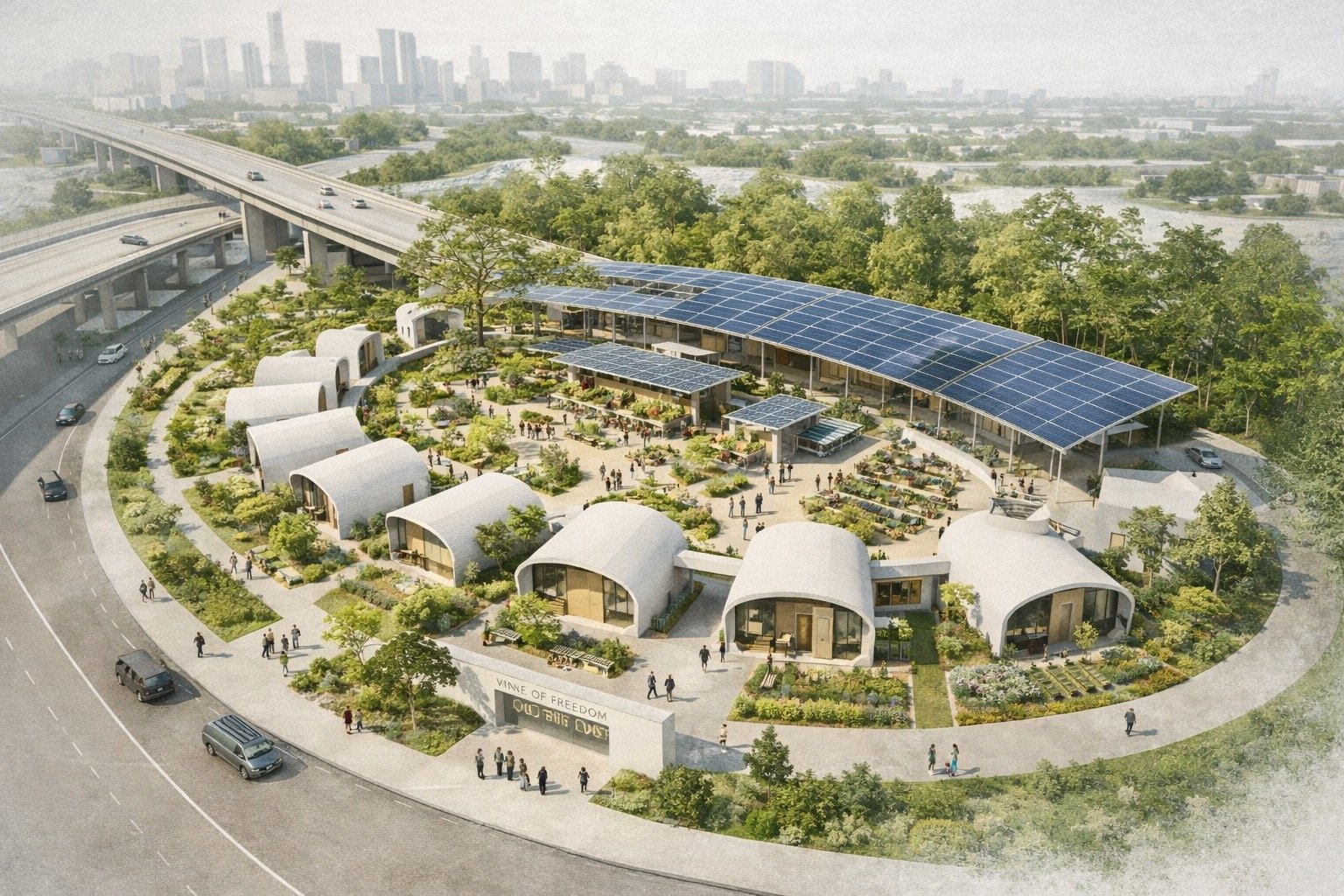
Vine of Freedom is a corridor-scale regenerative infrastructure framework that transforms Houston’s freeway edges into climate-positive civic systems.
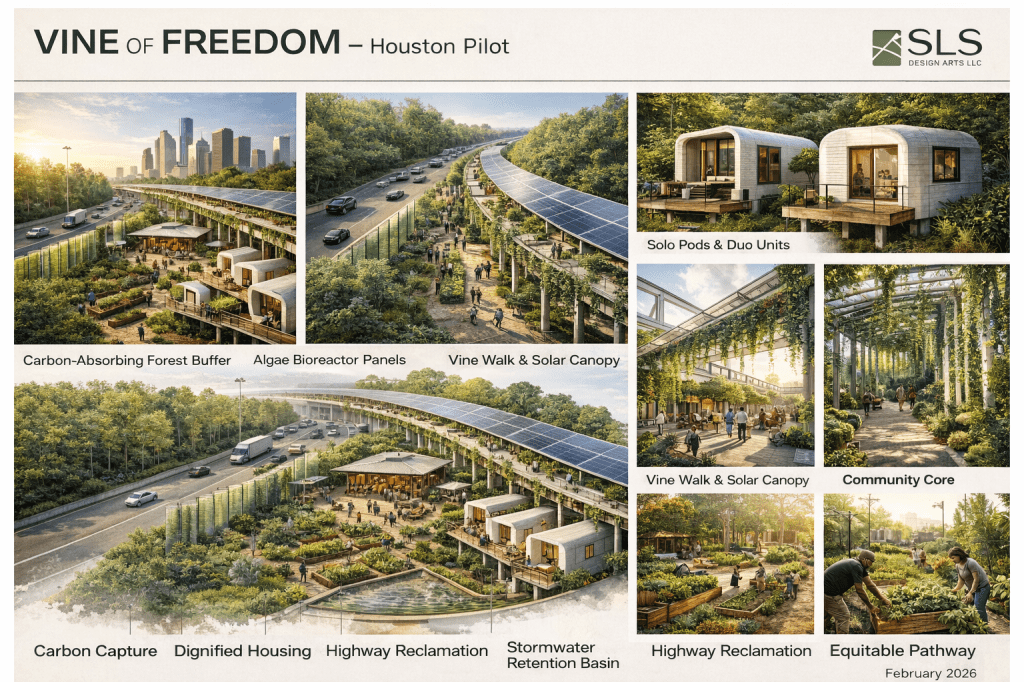
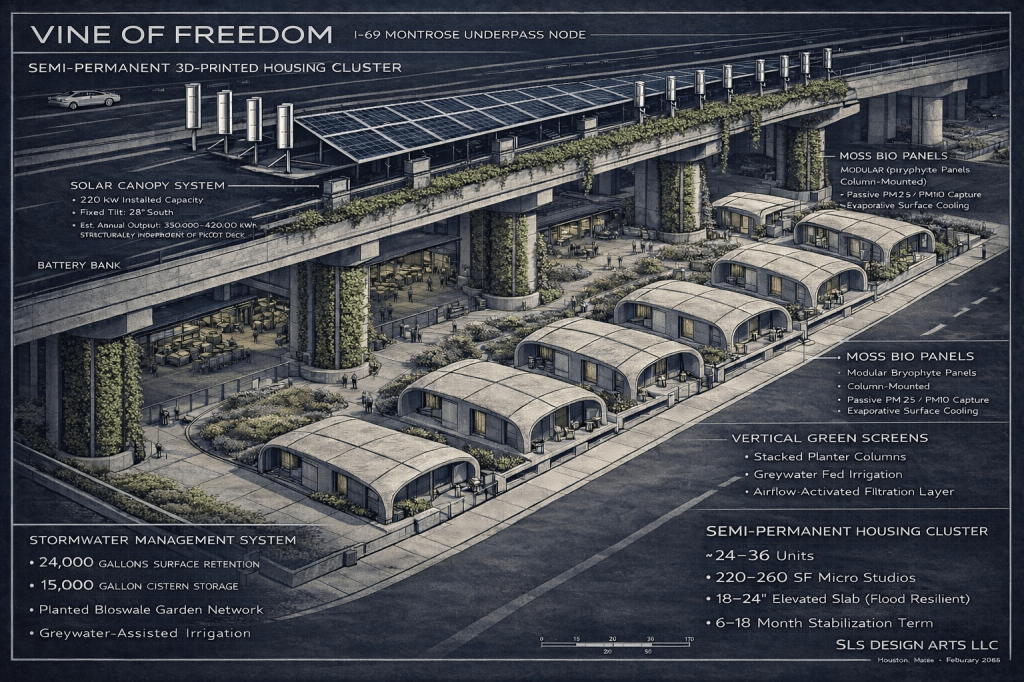
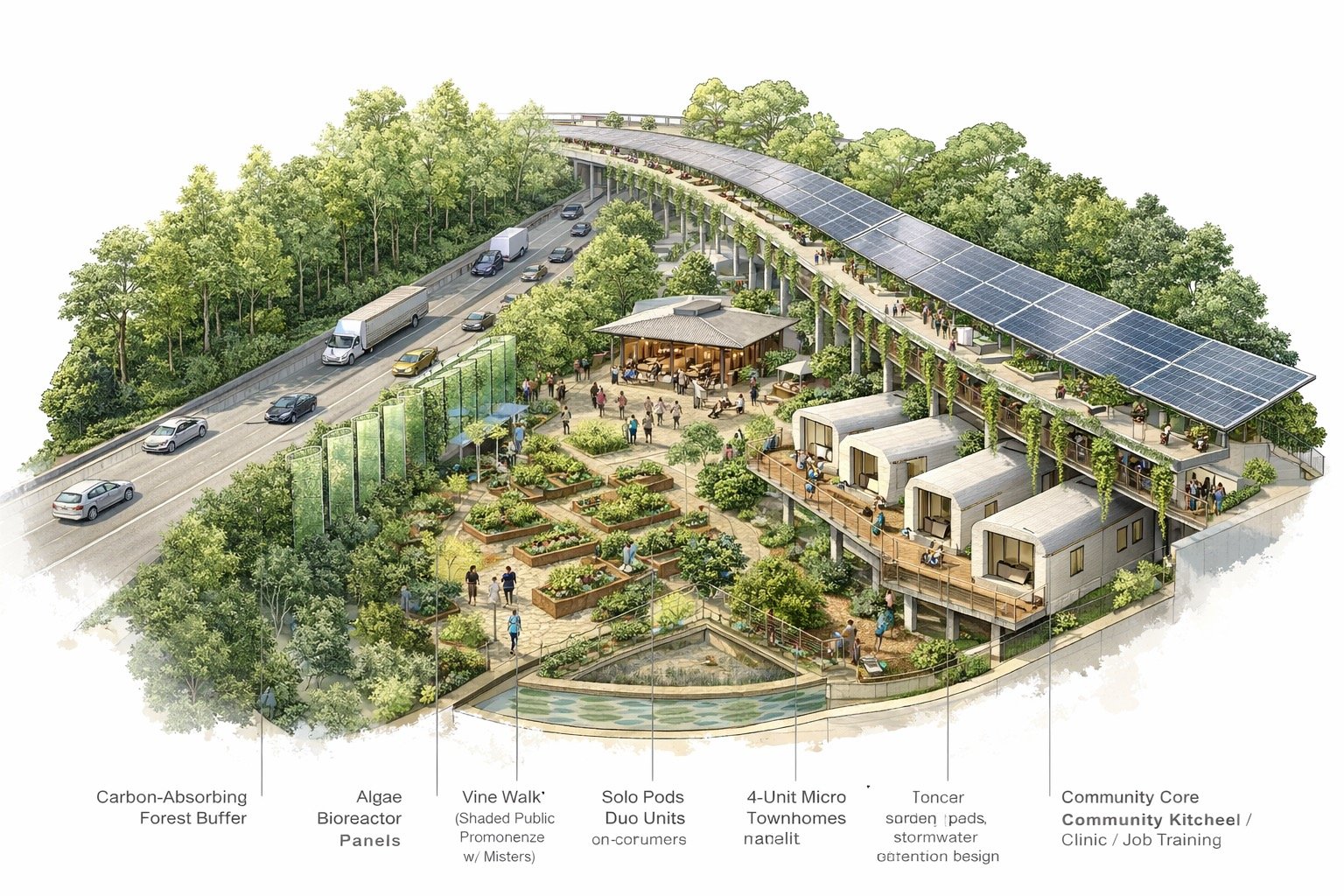
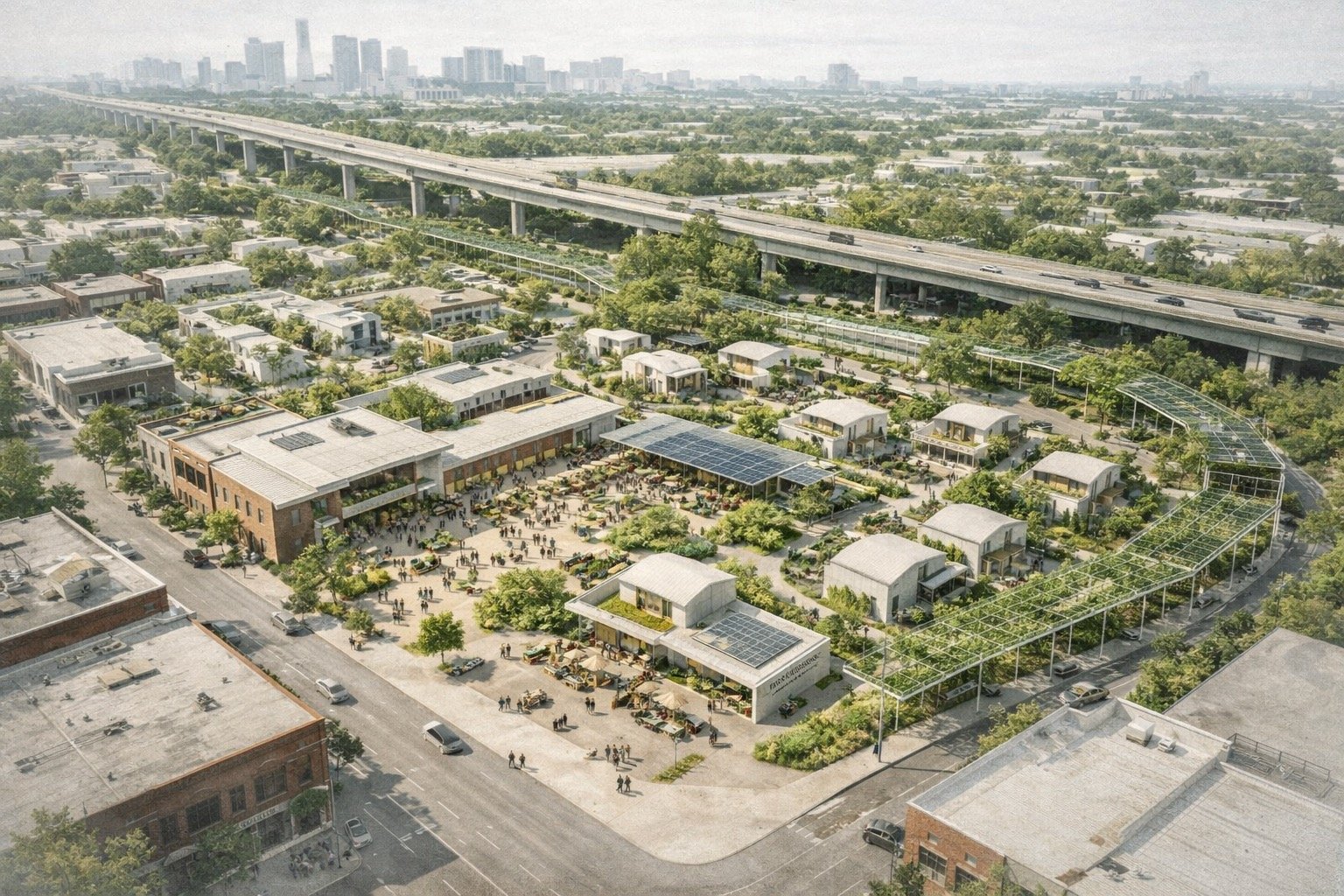
Energy generation, stormwater retention, air filtration, and stabilization pathways are integrated into repeatable underpass nodes connected by a shaded ecological spine.
The project reframes infrastructure not as division, but as connective tissue — stitching ecological performance and social dignity back into the urban fabric.
The Condition
Houston’s elevated freeway corridors generate heat islands, stormwater runoff, and fragmented neighborhoods. Vast shaded underpasses remain underutilized while surrounding communities face instability and climate stress.
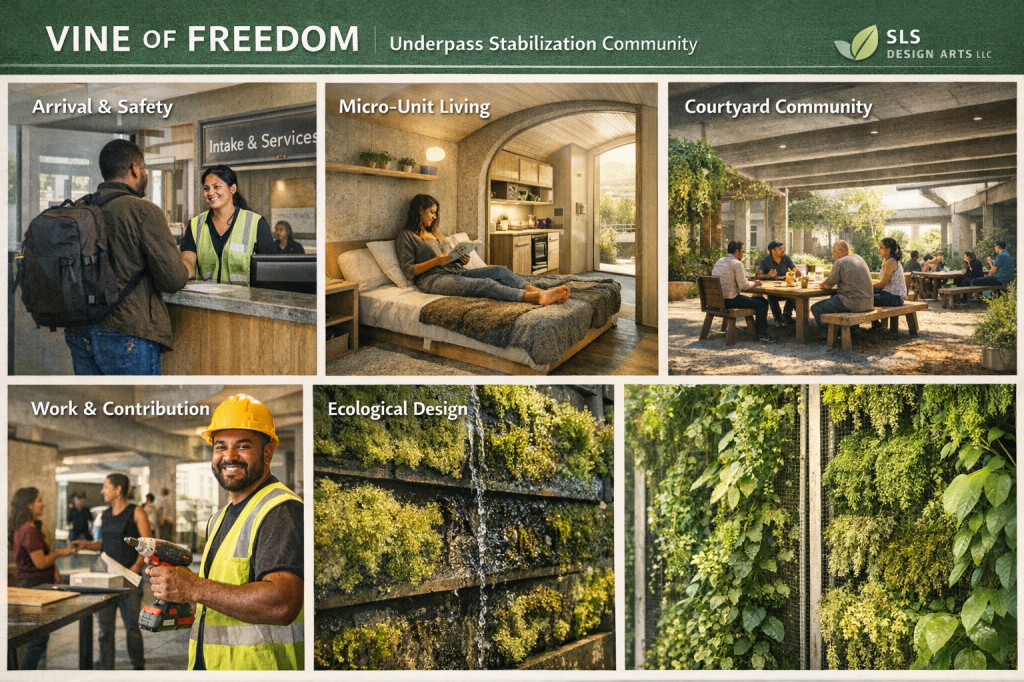
Vine of Freedom proposes a new civic use for these spaces — transforming infrastructural scars into energy-positive, water-responsive community systems.
Gateway Node
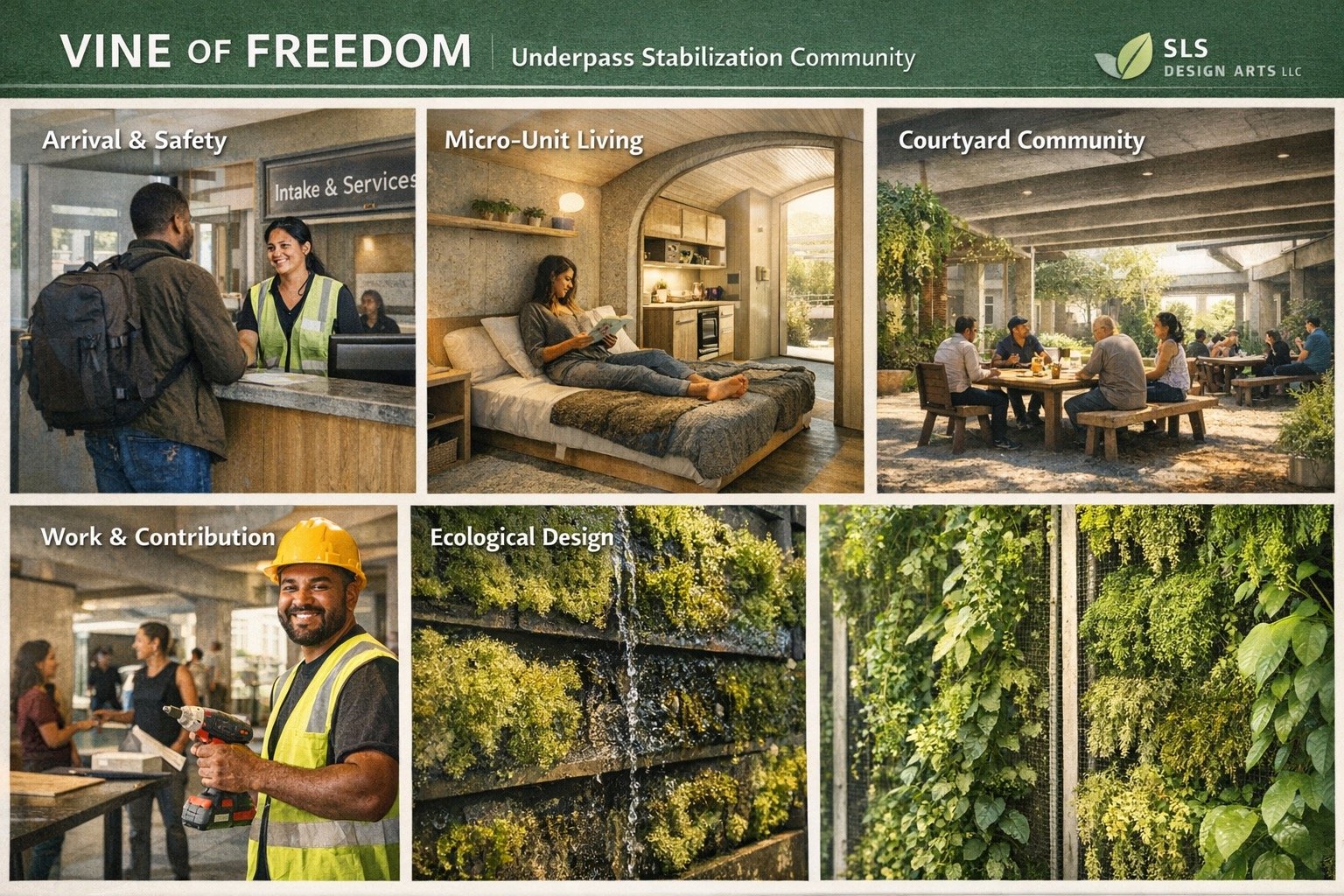
Project Facts
- Type: Regenerative infrastructure framework
- Scale: Corridor + modular underpass nodes
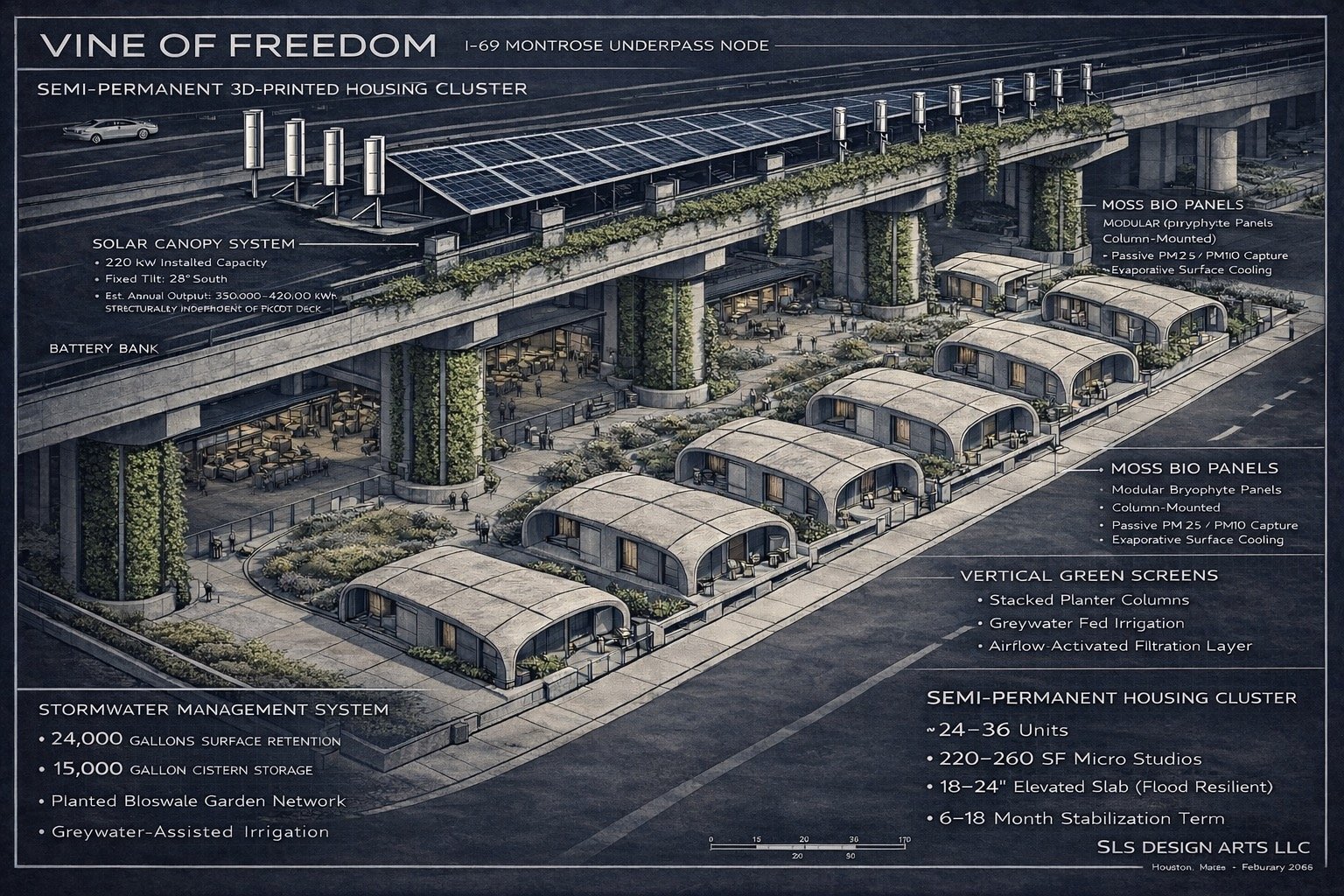
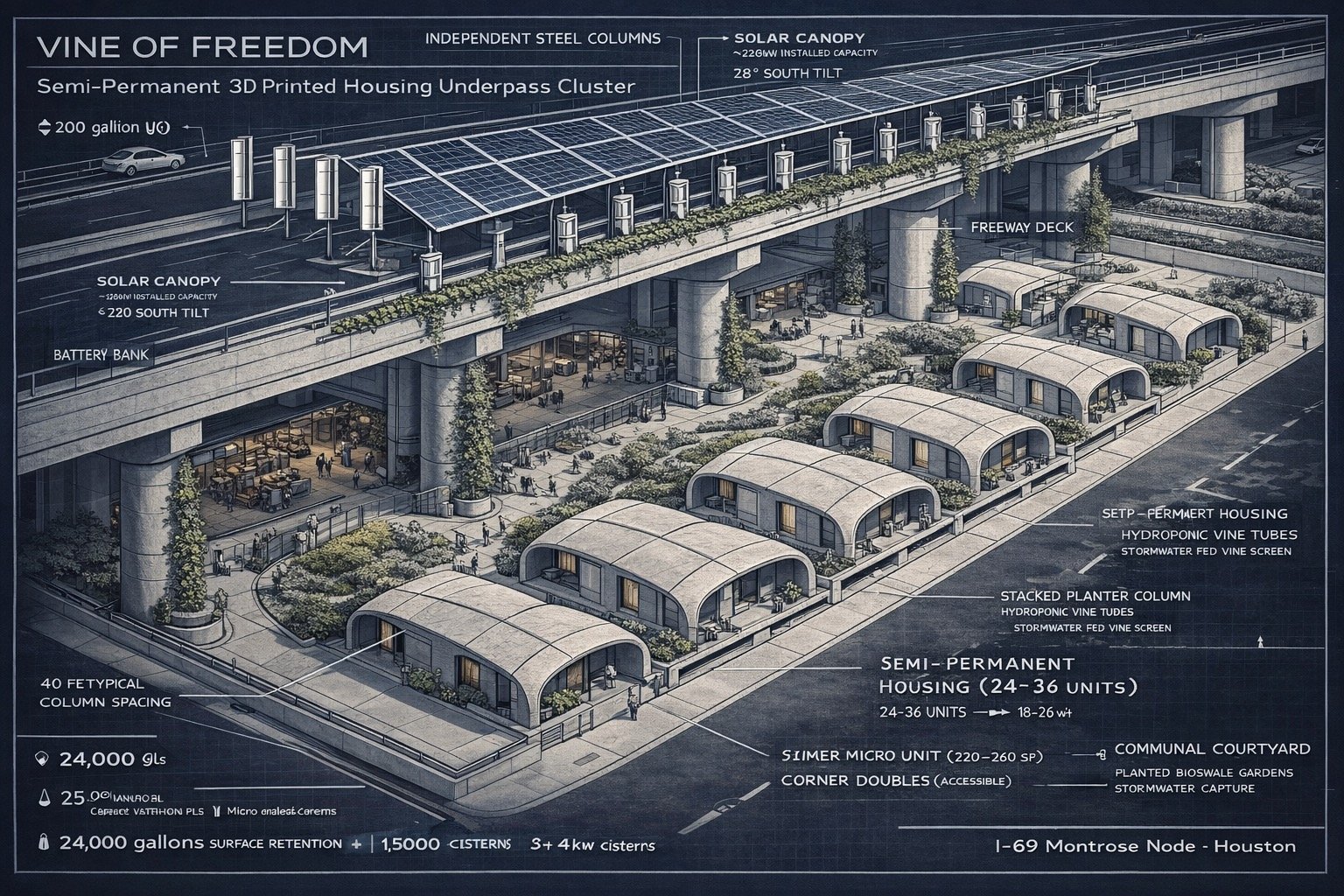
- Systems: Solar canopy microgrid · Stormwater retention · Air filtration · Stabilization + training
- Status: Concept + prototype boards (2026)
Gateway Systems Diagram
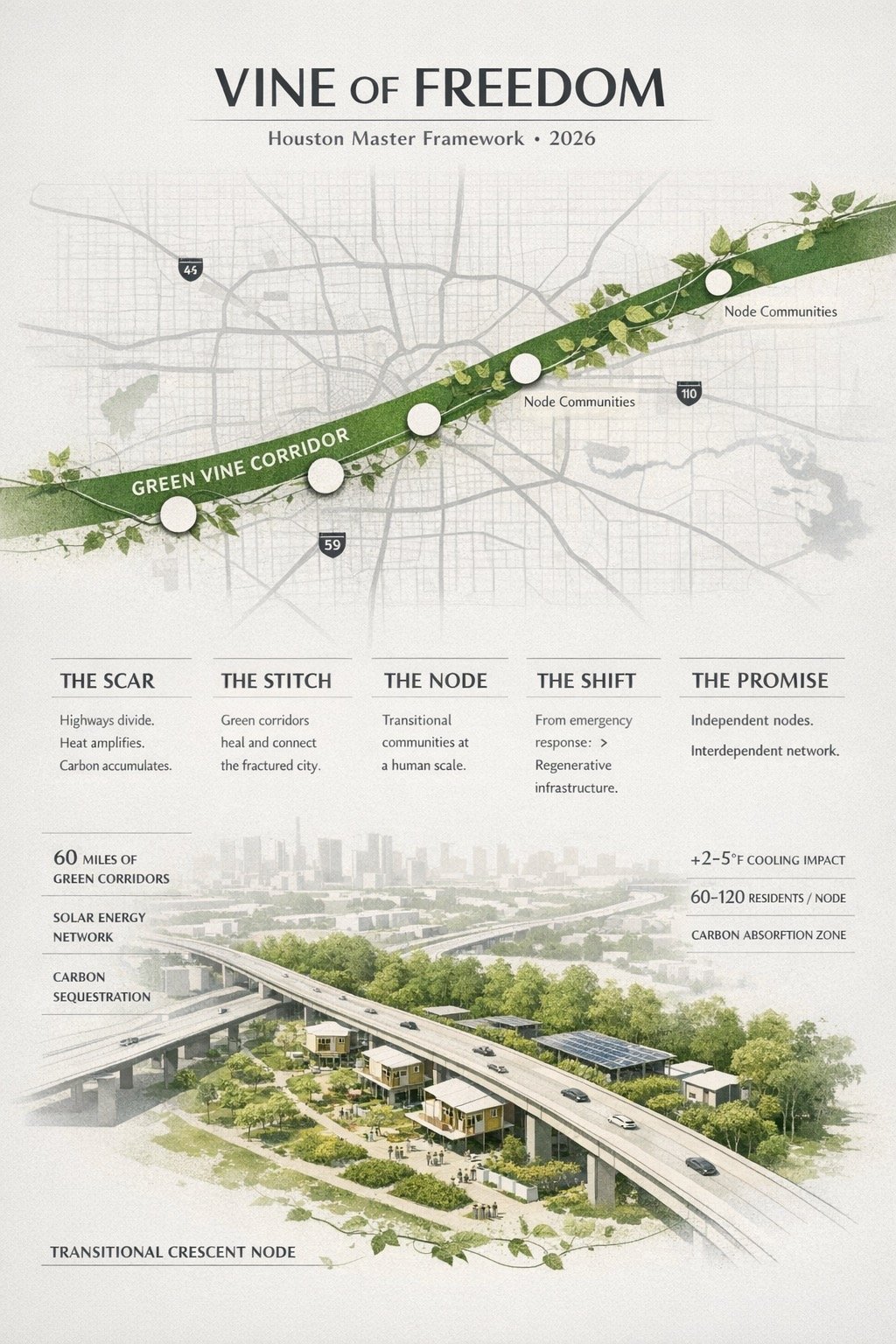
Citywide Framework
Vine of Freedom operates as a repeatable network: nodes concentrate services; corridors connect ecology, energy, and safe mobility.
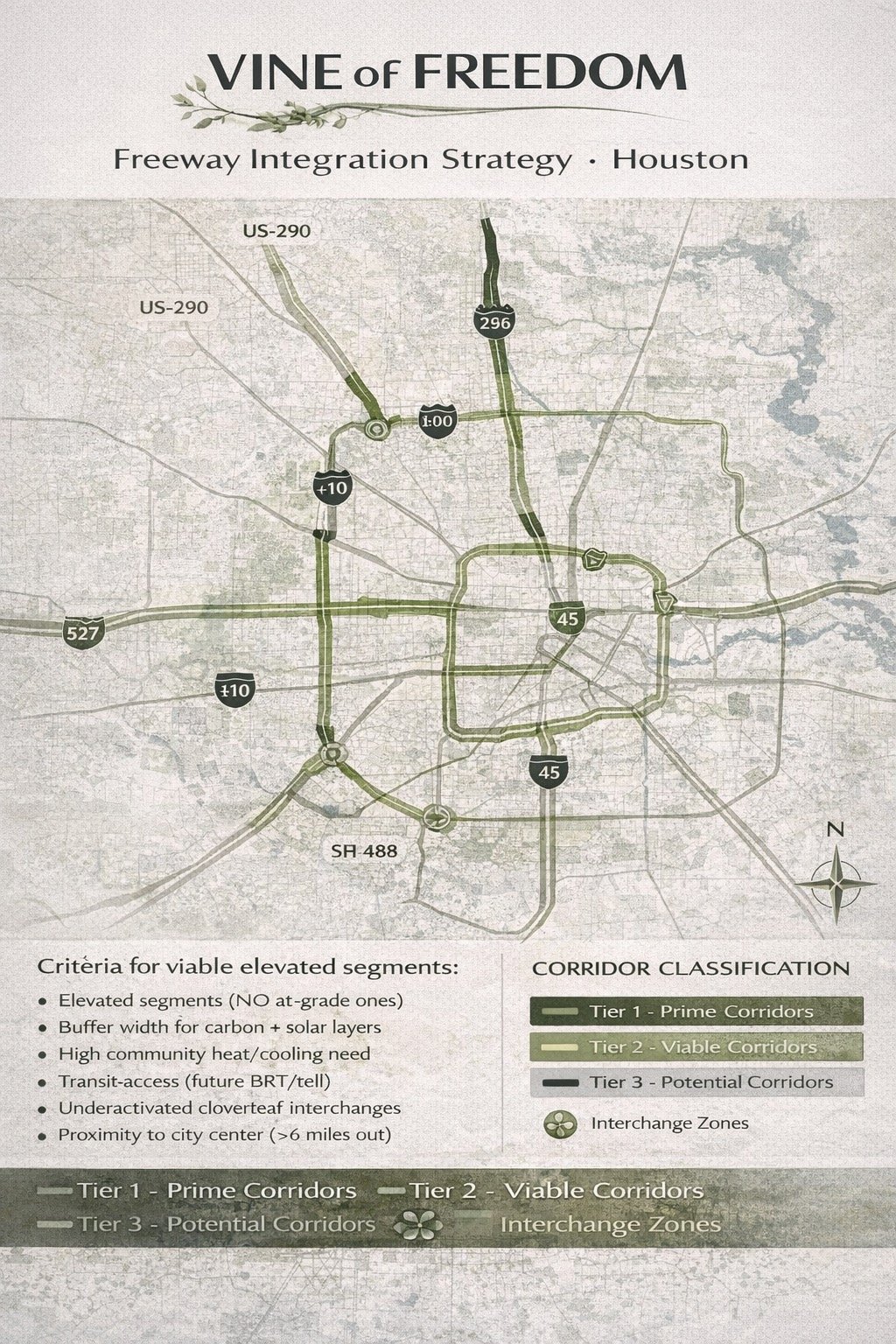
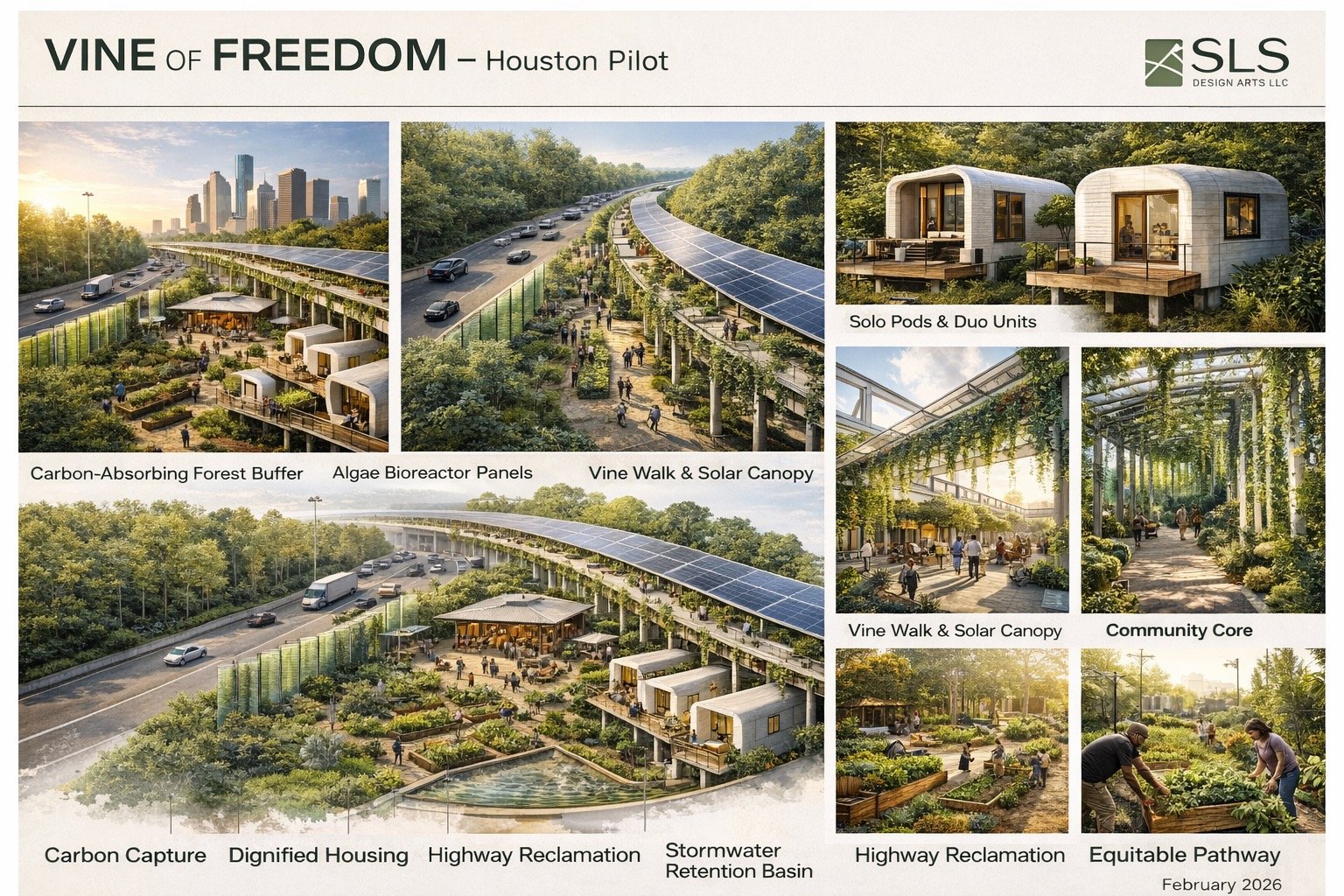
Houston Pilot
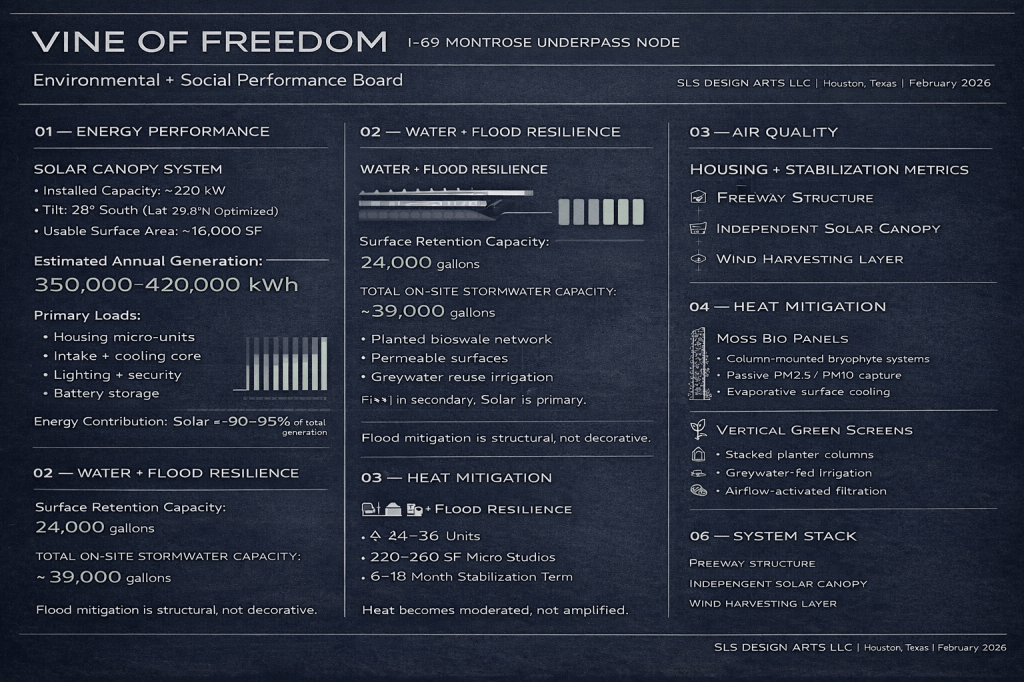
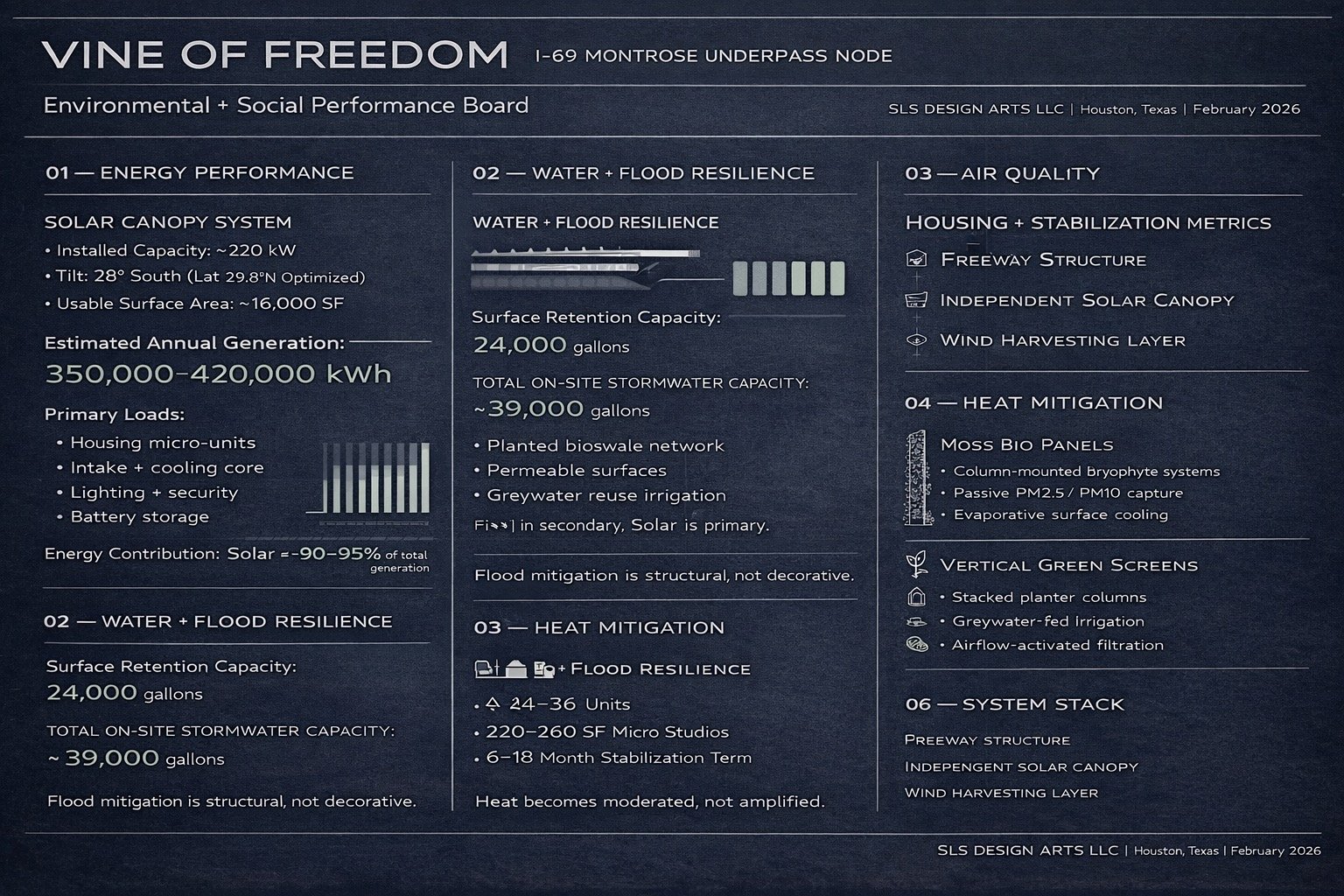
Environmental + Social Performance
Performance is measurable. Solar canopy output, stormwater capture volume, air filtration surface area, and stabilization capacity are quantified to ensure replicability and funding feasibility.
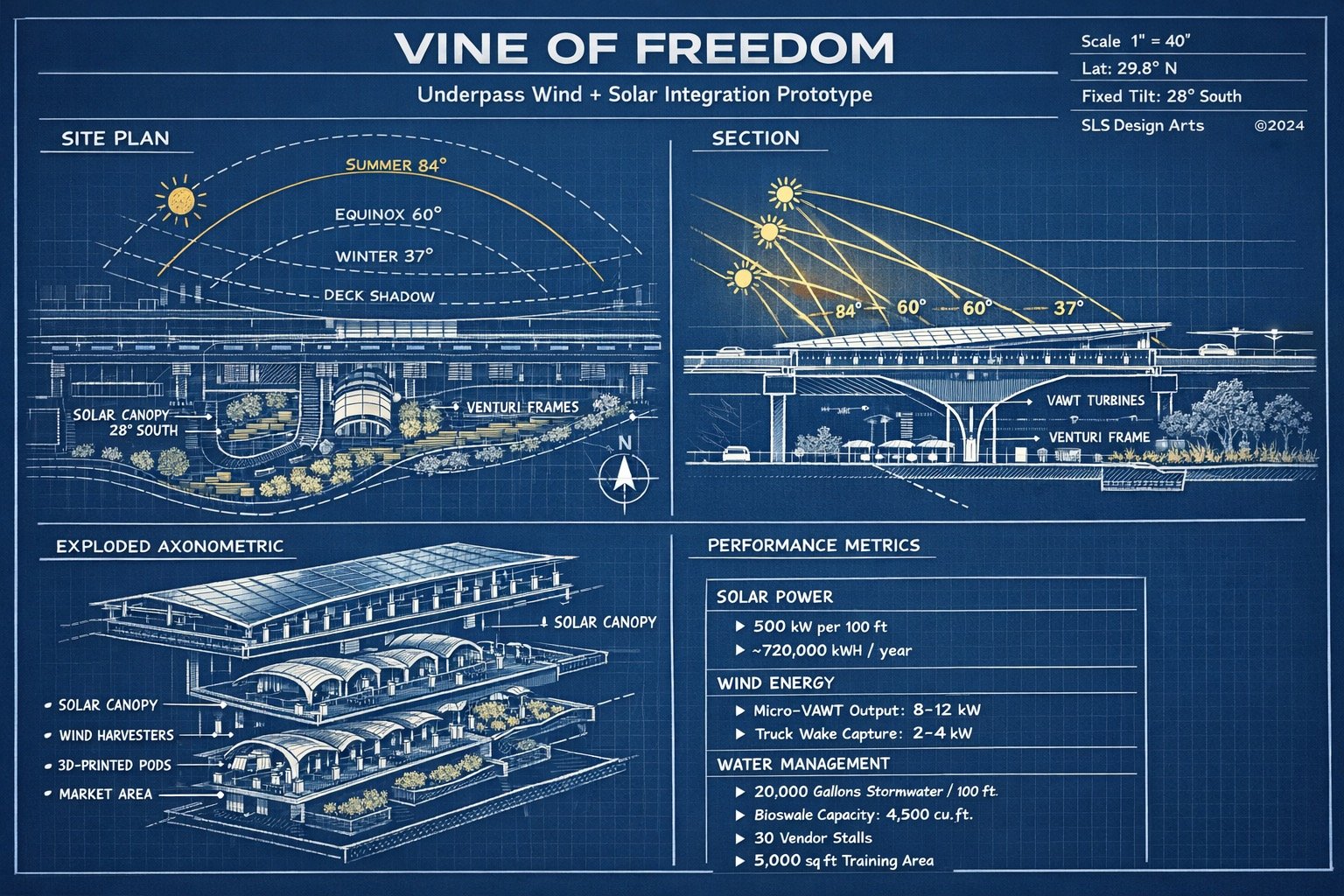
Underpass Prototypes
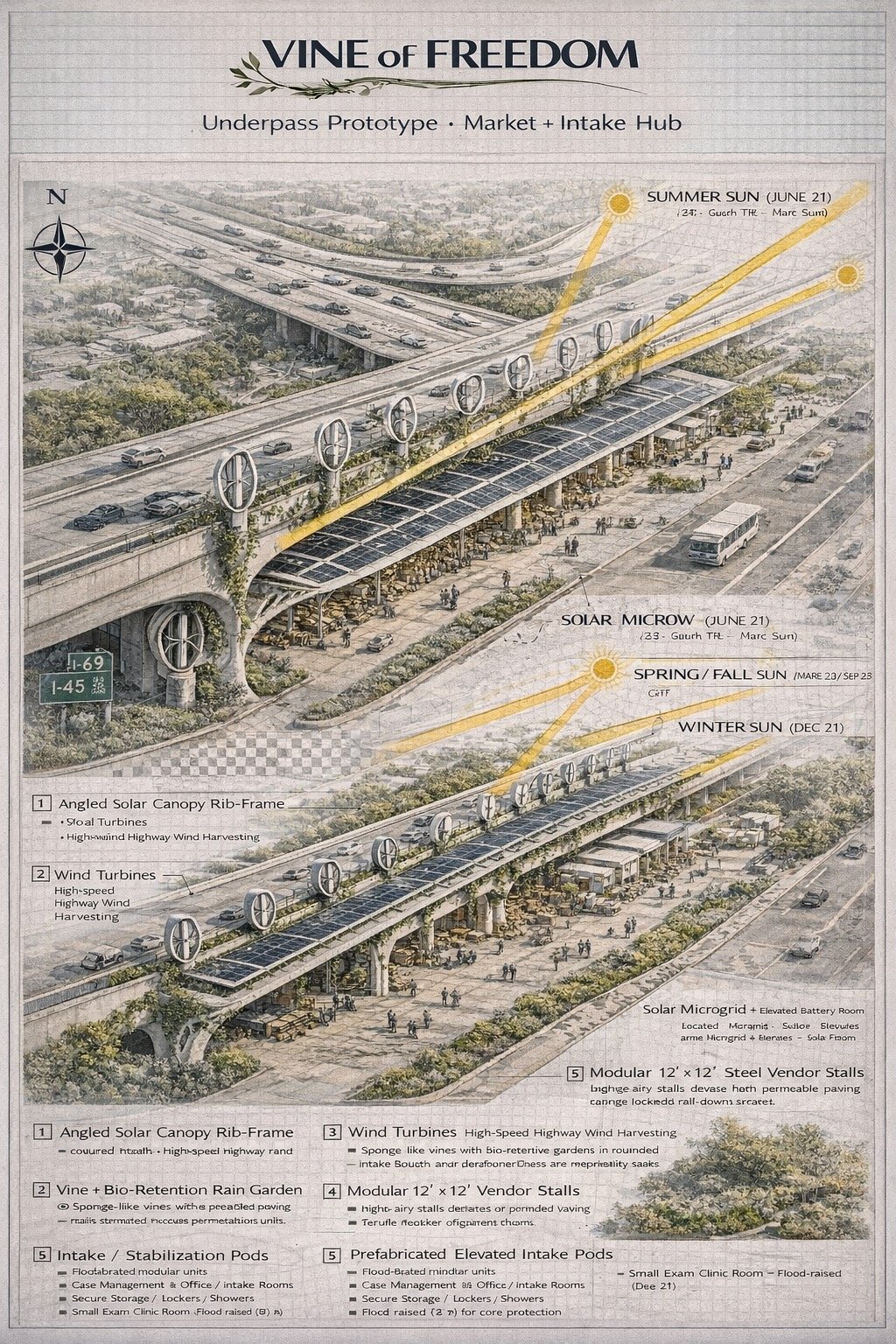
Corridor Vision
Strategic Impact
Vine of Freedom establishes a scalable model for climate-positive freeway retrofits across Houston and other sunbelt cities.
By aligning environmental performance with human stabilization, the project reframes infrastructure as a platform for resilience, autonomy, and regenerative growth.
SLS Design Arts LLC
Regenerative Urban Systems · Houston, Texas · 2026
Related Projects:
Solar Garden Commons
Gazza Coastal Coil
 Site Title